

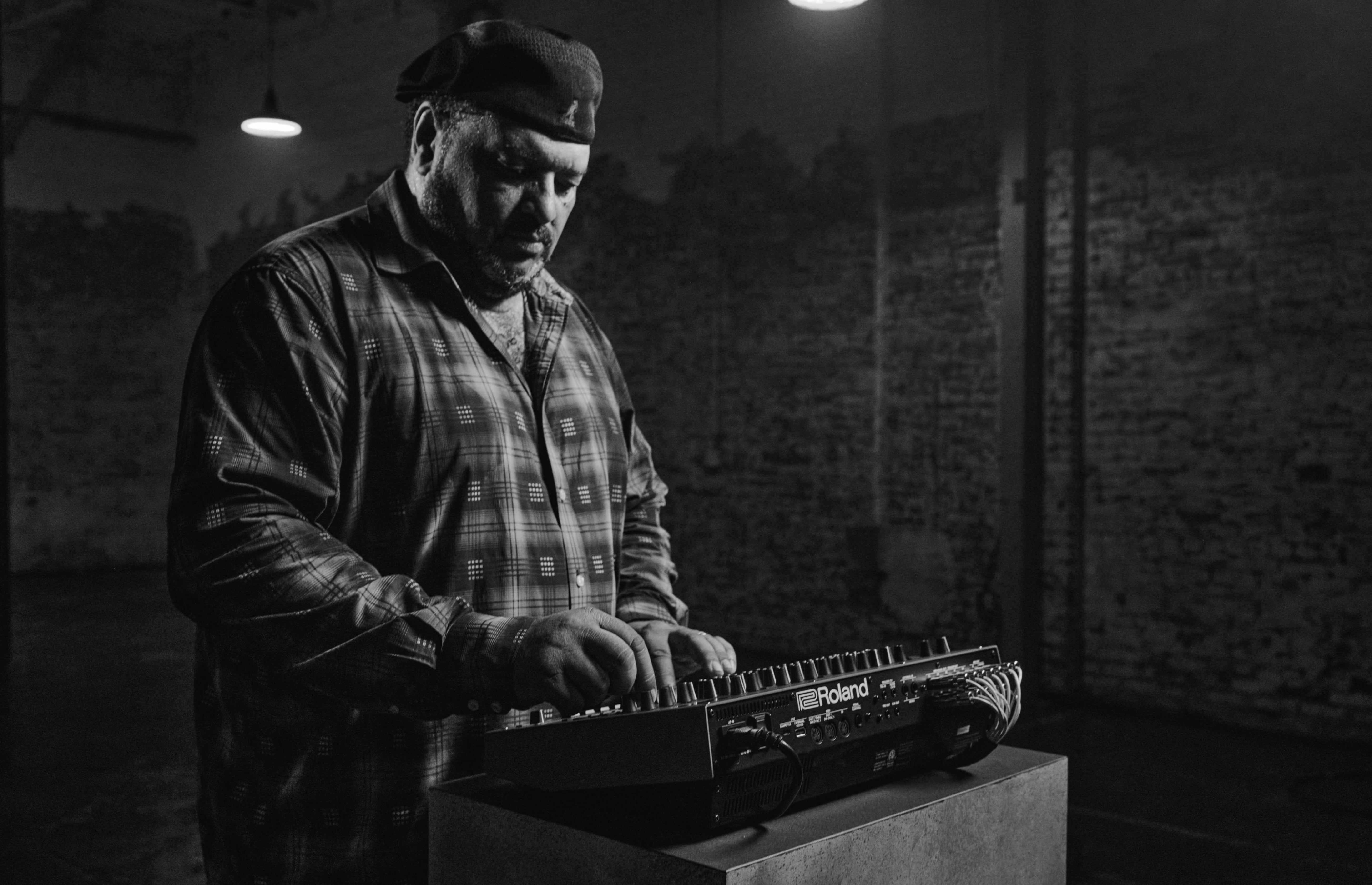

About five years ago, engineers at the Japanese electronic instrument company Roland realized they had a unique conundrum. The sounds they’d created in the early 1980s, notably from the TR-808 and TR-909 Rhythm Composer drum machines, had more than stood the test of time.They were used in nearly every modern hip-hop and dance track, if not all contemporary music. But almost nobody making these songs was using the original hardware. Plug-ins and sample packs did the job instead.Young producers, raised on software like Ableton Live and FL Studio, were largely unfamiliar with Roland and its history.
“When I’d pull up for an event, I’d say ‘Anyone who’s heard of the 808, put their hand up,’ and every hand would go up,” says Matthew “Recloose” Chicoine, Roland’s marketing director, and a noted DJ/producer himself. His day job involves traveling the world, evangelizing Roland’s products, and leading workshops on their machines. “Then I’d say, ‘How many people have heard of Roland?’” Not nearly as many hands would go up.
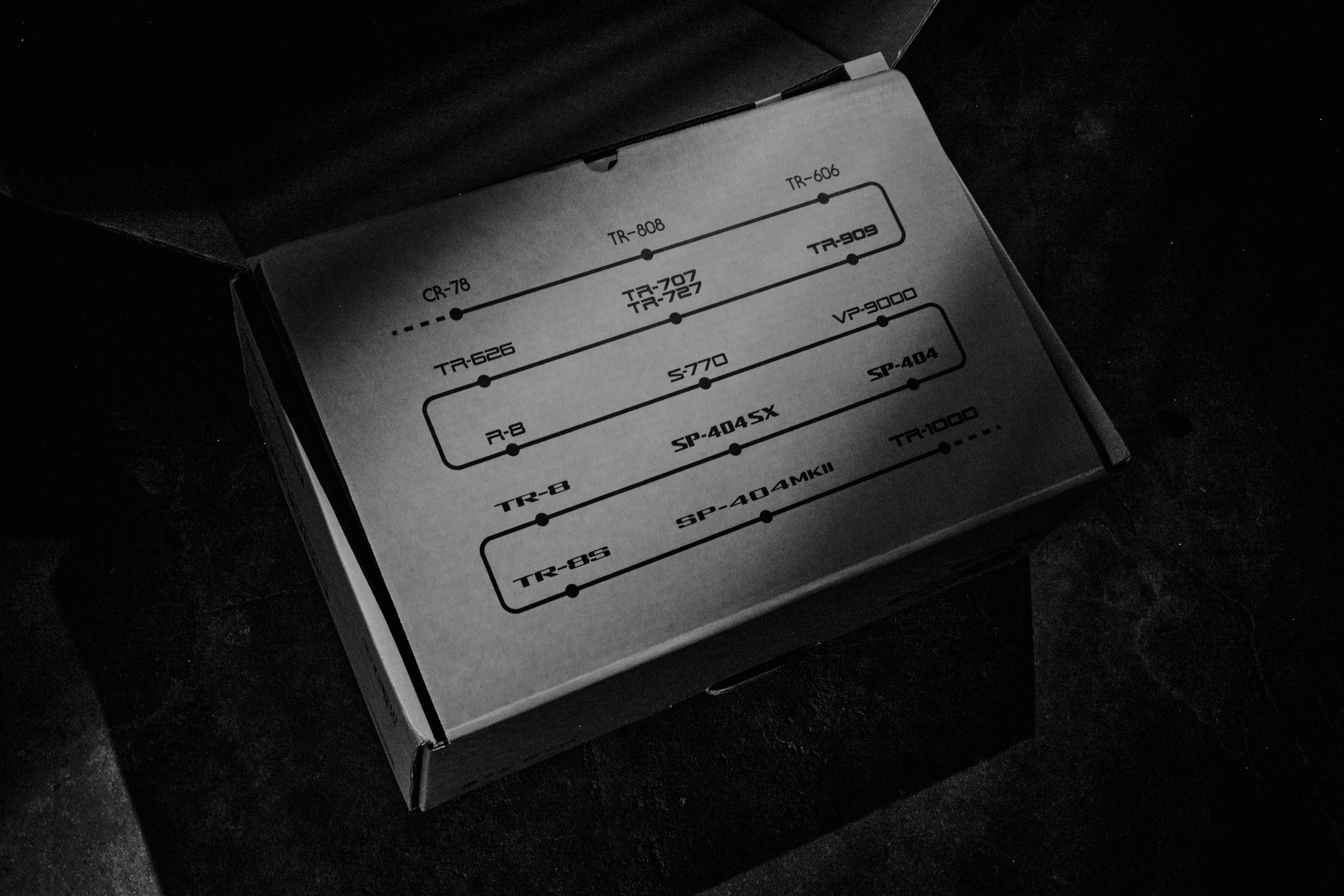
It was an interesting position for Roland. Founded by engineer/inventor Ikutaro Kakehashi in Osaka in 1972, Roland is legendary for its pioneering work producing analog synthesizers, effects units, and sequencers. In the late 1970s and early 1980s, the company helped popularize drum machines, first with the CR-78 (the 1978 machine used to make Blondie’s “Heart of Glass” and Phil Collins’s “In the Air Tonight”), then the TR-808 in 1980 (as heard on Marvin Gaye’s “Sexual Healing” and Afrika Bambaataa and the Soulsonic Force’s “Planet Rock,” among countless hip-hop records). Finally, in 1983, came the TR-909, which the architects of Detroit techno (Derrick May, Jeff Mills) and Chicago house (Frankie Knuckles, Ron Hardy) used to build the bedrock of electronic dance music. Those drum machines were not initially successful, commercially speaking.
Only when they landed on the secondary market, selling for a fraction of their original cost, were they picked up en masse by hip-hop and dance creators. But Roland, undeterred, kept releasing TR series drum machines. Then, in the late ’90s and early 2000s, they shifted their attention to grooveboxes like the MC-303 and MC-505, along with the SP line of samplers—especially the SP-404—which were adopted by producers like J Dilla and Madlib, who in turn inspired countless lo-fi beatmakers to grab their first hardware sampler and start digging in the crates.
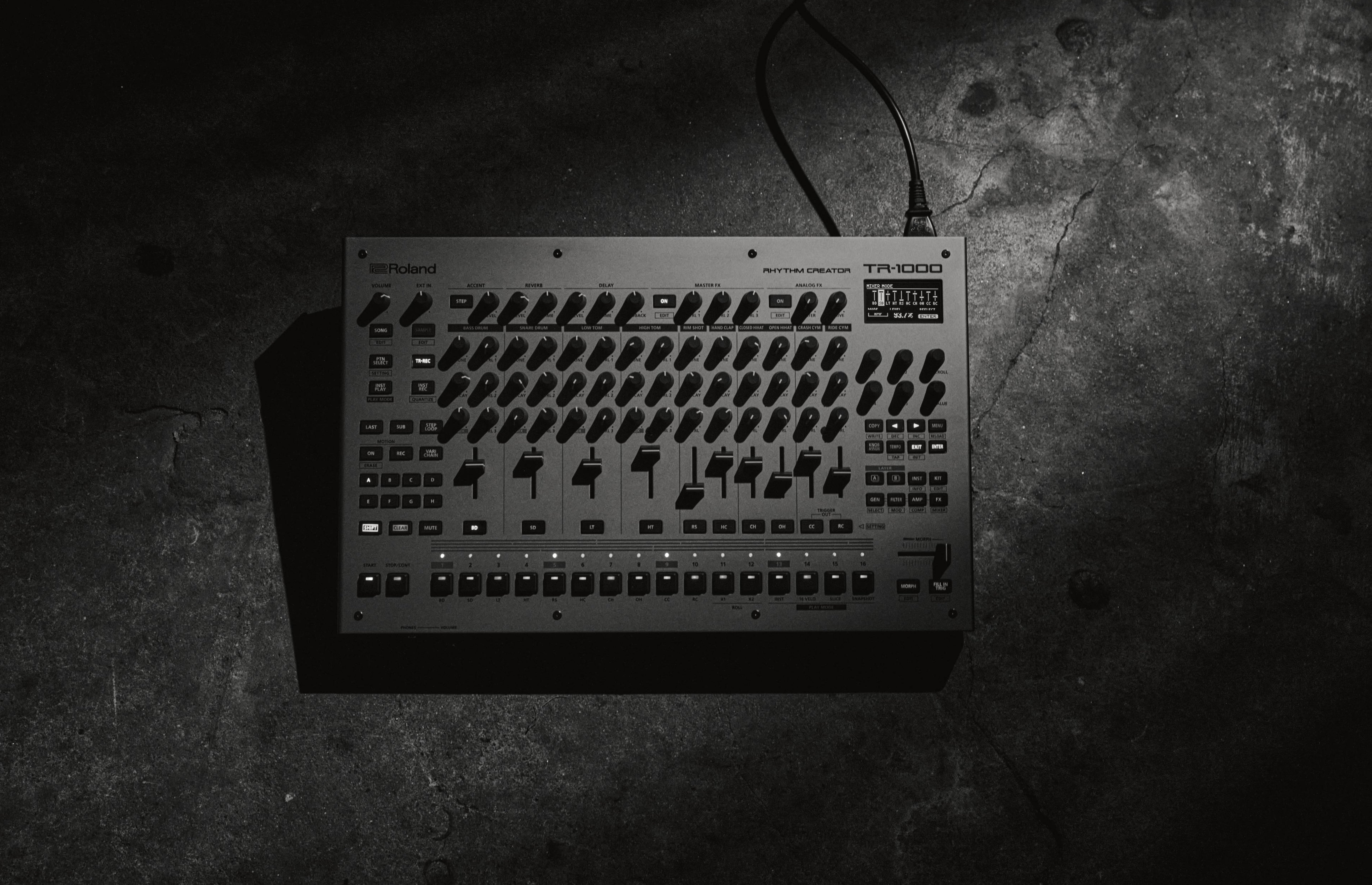
Historically, the company wasn’t short on innovation or influence. Some of their products, along with those from other companies, were so revolutionary that, in the early ’80s, the Musicians’ Union in the U.K. tried to enforce a ban on electronic instruments. Still, in recent years, it seemed like something wasn’t connecting. “[The] 808, 909, 707, 727, 606, 78,” Chicoine says, rattling off a laundry list of influential Roland drum machines. “This is the vernacular of modern music. The sound you’re hearing is Roland. It’s on the radio, be it 909 snares or hi-hats, 808 bass…but not everyone understands those sounds are part of Roland’s legacy.We needed to take back our legacy.” To accomplish that, what they needed was a new product, something that married their celebrated past with present-day tech in a way that pointed towards the future. And that’s when they realized the path forward required stepping back in time. Enter the TR-1000 Rhythm Creator. Released in October 2025, the TR-1000 is Roland’s first analog drum machine in over forty years—something the company’s fans have long been clamoring for.“There was such a chorus of users, for decades, saying,‘Roland, please come back and make something true analog for us.’ People wanted the real thing,” Chicoine says.“Finally, we were able to say, ‘Yeah, this is bold, let’s do it.’ But if we’re going to do analog again, we have to do it in a way that’s futuristic and forward-thinking.”
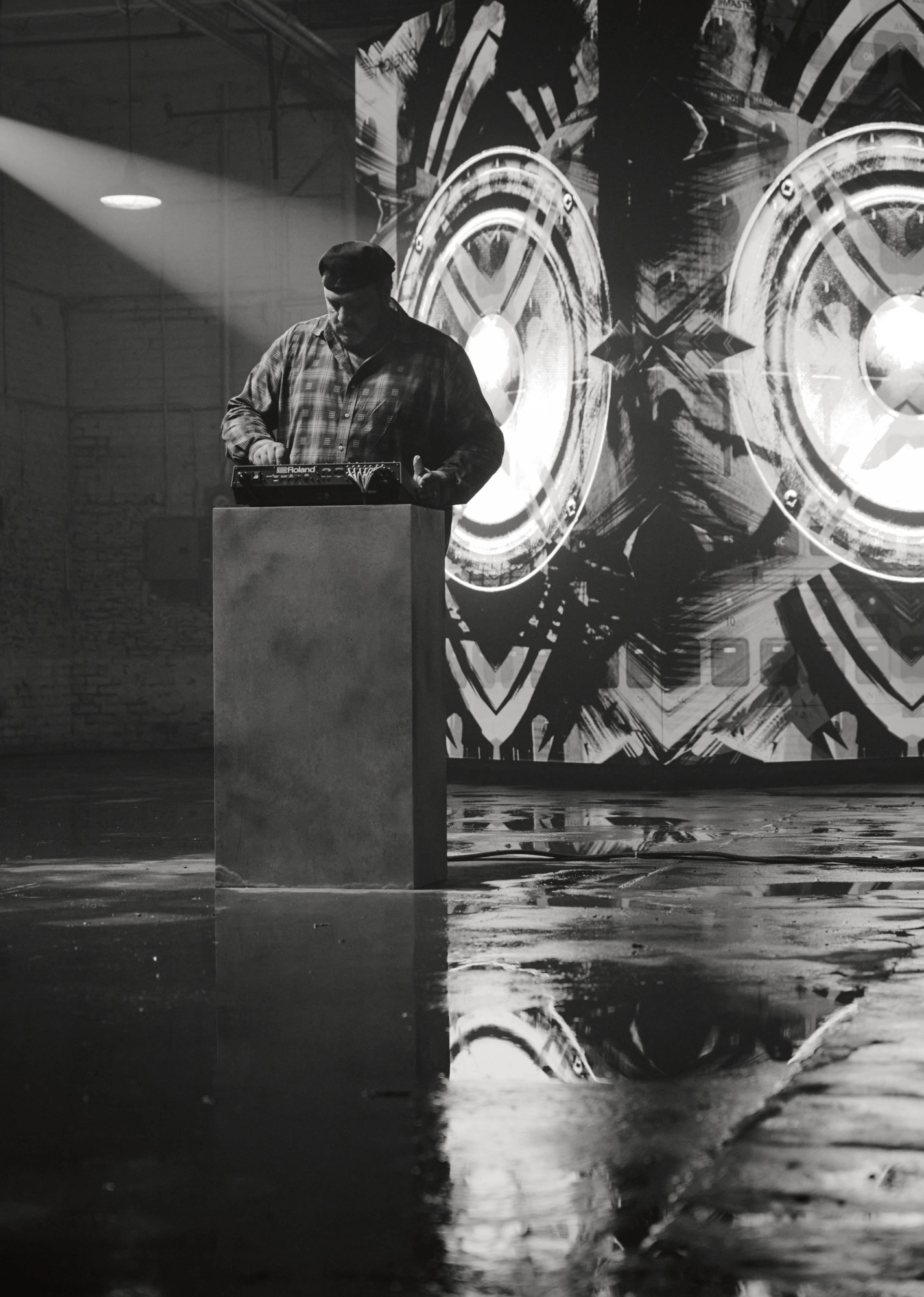
(below) Kuniyuki Takahashi demonstrates the Roland TR-1000 Rhythm Creator at Electric Pony Studios in Los Angeles.
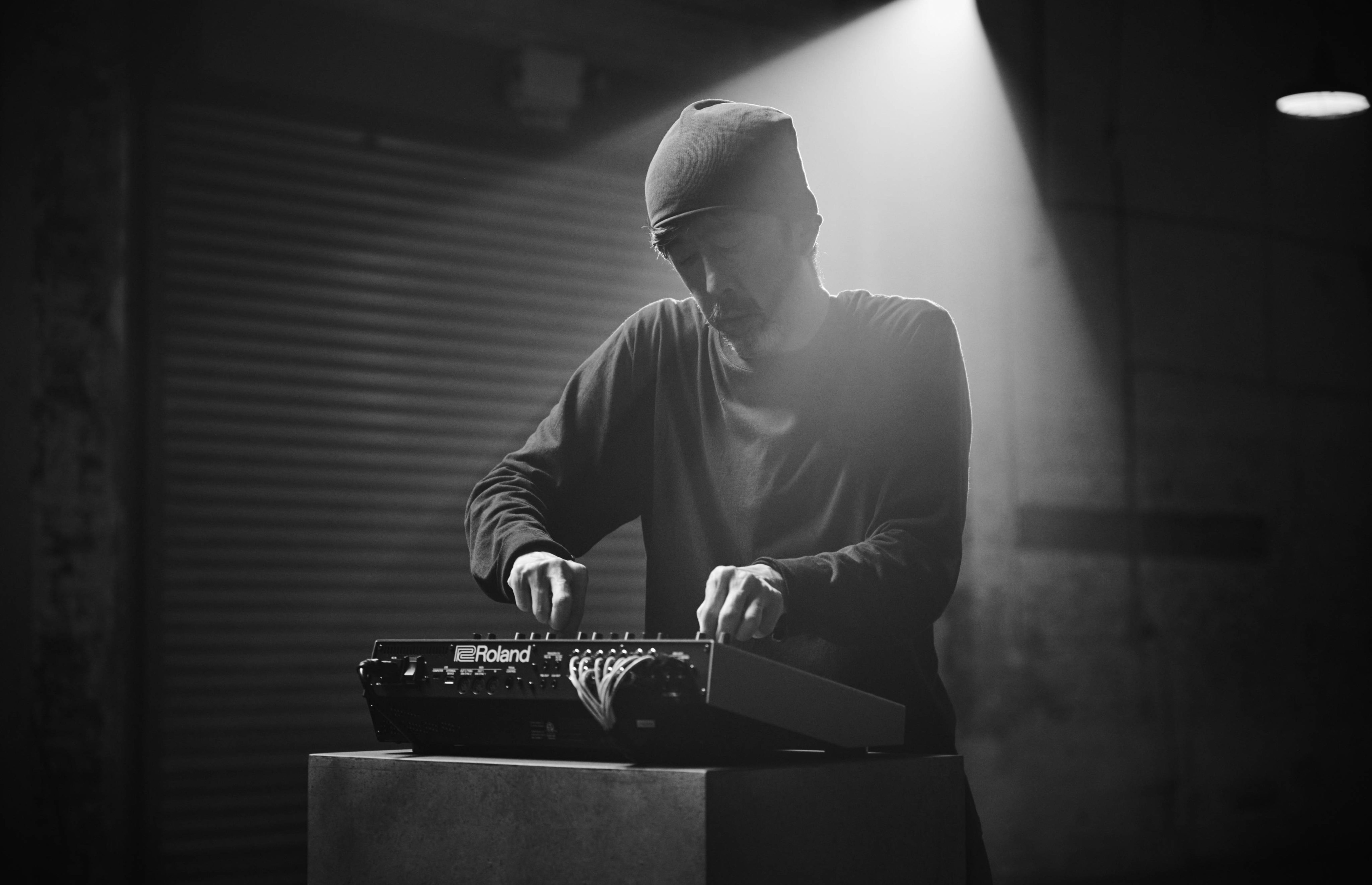
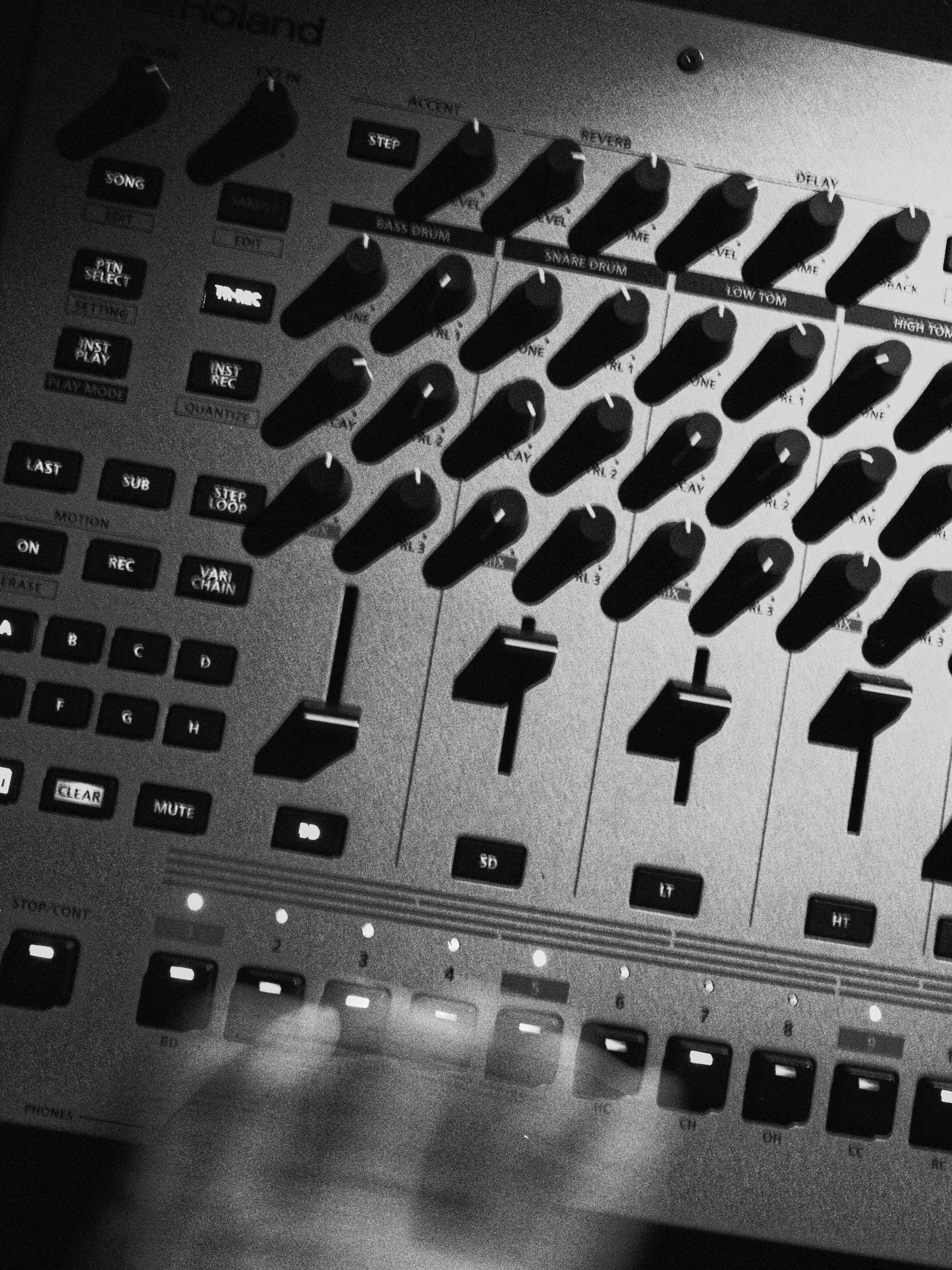
Conceived as both homage and evolution, the TR-1000 features sixteen analog circuits recreated from the original TR-808 and TR-909 designs, built with modern components. Crucially, it offers a digital synthesis engine as well. The 808s and 909s are virtually mapped to the analog circuits via Roland’s Analog Circuit Behavior (ACB) technology, allowing for extensive manipulation. And the machine comes pre-loaded with two thousand sounds to get started with, and dozens of effects.
If that wasn’t enough, FM and VA synthesis engines are also included, as is a full suite sampler for chopping, programming, and resampling your own drum loops, and a sixteen-step sequencer, which brings back the workflow of the classic TR machines through a contemporary lens. Nearly every knob or fader is assignable, offering a head-scratching number of possibilities. Designed for musicians who could easily rely on the limitless flexibility of digital production tools but purposely choose the constraints and character of tactile, analog hardware instead, it’s a throwback to a bygone era, outfitted with the tools needed for modern music production and performance.
“The truth is that much of Roland’s brand equity has been created by artists that found these instruments [later on], and reinvented them,” says Chicoine. “They brought all this new energy and life, and they brought all this attention to these instruments.
We developed the TR-1000 in the hopes that, much like the 808 and the 909 spawned new styles of music that we never anticipated, this too may entice creative folks to have new ideas and make new sounds.”
“A lot of [musical instrument] companies in general make this product for a certain individual, a certain market, but they never really talk to anybody who’s using this thing,” says Kenny Dope, one half of the legendary house music duo Masters at Work, speaking from his studio in Maryland. He recalls the first time Roland came to him with the idea for the TR-1000. “With the Roland history, [and] what was laid as a foundation—the early drum machines, early synths, and the early sounds used on so many records—we’ve gotta be able to incorporate that in one piece,” he remembers advising. “They showed me a prototype. I said, ‘I like this, I don’t like this. I love this.’ They came back like, ‘Yo, we got it to this point.’Then I’d say,‘It needs to sample. It needs to warp. It needs to chop.’ And Roland has had those features in other machines. It’s like one machine does one thing really good, another machine does something [else] really good, but [before it was] not combined.”
Kenny emphasized to Roland that, no matter what, the machine needed to be simple.The more features added, the more complicated using the machine might become. Nothing kills creativity faster than clicking through a series of menus to get things done.“You need to be able to look at the machine and say, ‘Alright, you know what? Let me just go,’” he says. “And that’s what the TR-1000 is.”
In Detroit, the birthplace of techno and its myriad offshoot genres, Roland huddled with a list of notable figures including “Mad” Mike Banks and his extended Underground Resistance collective; Carl Craig; Juan Atkins; Scott Grooves; and Octave One. Tommy “Tom Tom” Hamilton and William “B.J.” Smith (a.k.a. Posatronix) of influential techno duo Aux 88 recall Roland asking them what kind of machine they’d make if they could tap any features in the world.
“It was kind of like a techno Christmas for a drum machine,” says Tom Tom. The group were already devotees of Roland hardware, citing the Juno-106 synthesizer, R-70 Human Rhythm Composer drum machine, and sound modules like the S-330 and D-550 among their favorites.Two machines they had never used, however,were the 808 and 909.While these were the foundational tools of techno, by the time Aux 88 was working on their seminal 1996 LP Is It Man or Machine (Direct Beat), they were too expensive on the resale market—and, crucially, too limited in their feature set—to seek out.
“If you listen to Man or Machine from back to front, you’d assume that there was an 808 or a 909 involved, but [there] wasn’t,” says Posatronix.“Which is why we kind of ended up with our own sound. We didn’t have the advantage of having a bunch of stuff when we were coming into the game.We modified everything in the drum machine that we had.”
Working on the Roland R-70, the duo stacked drum sounds on top of each other, then added effects and tweaked parameters
until they achieved something truly unique. That hands-on approach is how they still work today, opting for a full hardware setup and, aside from recording in Pro Tools or Logic, eschewing most software-based solutions. They feel the ability to touch the equipment inspires them in ways that Virtual Studio Technology (VST) instruments do not. And that’s something that attracted them to the TR-1000.
“When you get to turning the TR-1000’s knobs, all of a sudden, what’s there becomes unique to how your ear hears it,” says Posatronix.“There’s a tactile, hands-on type of art to it.This is a canvas that allows your brain to be the paintbrush in a physical way, using your hands to paint with, versus VSTs.There’s a different connection and value you get from your own internal art.”
Having the ability to play the machine like an instrument itself is what leads to the kind of happy accidents that made the original line of Roland drum machines so revolutionary.West Coast hip-hop pioneer Egyptian Lover remembers getting money from his mother to buy a TR-808 from Guitar Center in the early 1980s. Shortly afterward, he was on stage with the party promotion crew Uncle Jamm’s Army at the L.A. Sports Arena, playing a cover version of “Planet Rock” on the 808.
Bringing that human touch back to electronic music production was precisely the intent, says Peter Brown, Roland’s product development leader on the TR-1000.“You can really just jam out and lose yourself in it,” Brown says. “And it doesn’t feel like you’re battling a computer.”
“I was scared they were going to stop dancing and start fighting because it was just a drum machine—not a record,” Egyptian Lover said in an interview for Roland’s website. “But nobody stopped dancing. Actually, people started dancing even harder. I broke it down without the cowbell, without the hi-hat, then brought the cowbell back in, hi-hat, and the rimshot.Then I changed the beat, and everybody freaked out.”
Following that, Egyptian Lover released a series of influential electro hip-hop records; again, he used the 808 in ways never imagined. While working on 1984’s “Egypt, Egypt,” he began plugging cords into the machine’s inputs when he noticed a “duda-duda-duda-duda” sound. The engineer told him it was coming from the machine. Only then did he learn that the 808 had an accent function that could alter the drum velocity, and that this function could be programmed to create a melody.“I put that in my song, and that was like the Egyptian Lover sound,” he told Splice, the cloud-based sample platform, in an interview. “It was created right there.”
Egyptian Lover still plays an 808 at gigs around the world, which is why Roland consulted with him on the TR-1000, too. When he got his hands on it, he was blown away.“The TR-1000 is like ten 808s,” he told Roland. “You can have that thing for a year and still discover things you didn’t know.Whatever you can think of, you can do…[it’s] the future of drum machines. I can see a DJ bringing the TR-1000 to the club and have it rockin’, like I do with my 808.”
El-P, famed for his work in Company Flow and Run the Jewels as well as for producing underground rap classics like Cannibal Ox’s The Cold Vein through his influential label Definitive Jux, has been using Roland machines since starting out in the ’90s. The 808 and 909 are favorites. Needless to say, he was skeptical of any effort to improve upon these staples of his production sound.
“When [Roland] first approached me, I wasn’t too excited,” he says.“I’ve had a bias against remakes of classic gear or hybrids. Most of my experiences with stuff like that [have] been disappointing. I
couldn’t really imagine that anything could stand in for my actual original Roland drum machines that I had collected over the years. Once I got [the TR-1000] in my hands, and started to understand this was more of a serious machine, I got amped.”
El-P’s change of heart would have him rewarded. The TR-1000 has joined his repertoire of trusted studio tools.“It’s officially been standing in for my 808 and 909,” he says.“That was the first test for me because I know those machines so well, and imitations have never really matched up. But, because they put the actual analog circuits in there, it’s not merely a substitute. I actually use the drums. It’s become my go-to quick drum pattern [and] demo machine. [It’s] always synced up, always dope sounding, quick, and easy to play with, and [there’s] no clicking a mouse—which for me is really liberating.”
For a hip-hop beatmaker such as El-P, the sampler feature was another gamechanger. “Using your own drums and sounds but with the swing of the 808 sequencer is something I’ve wanted forever,” he says. “[It’s] the ability to easily, tactilely blend sounds of my own with the classic sounds to create new, original shit.”
Roland took a gamble revisiting analog technology in a digital world. But even with a retail cost of $2700—slightly out of reach for novices—it seems to have paid off.The TR-1000 has already proven to be a hit.The initial production run sold out in two days, leaving them working feverishly to meet demand.
“We know when we listen to the artists, we make better products,” says Chicoine. “Artists are key to our future and our success. They have been, they will continue to be. [But] let’s embrace them by design, and create an instrument with them, with their feedback.That’s how we wound up with the TR-1000. We got the formula right.”
Martyn: Between the Inner and Outer World
With a career spanning more than two decades of releases, the DJ and producer Martyn has created his own lane in bass music. And with his latest record, Music for Existing, the Dutch-born, Washington DC based artist pushes beyond the dancefloor, drawing as...

Wax Poetics Summer Issue - Mariah Carey, Tupac, Mannie Fresh, Nightmares on Wax - Editor's Letter
10,000 HOURS Professional networks, tight-knit scenes, and informal underground subcultures are invaluable to creative development, giving artists and musicians a forum to find their voice, and workshop creative ideas before joining the glut of the broader market. You’re probably familiar...
The Freedom Songs of Bill Withers
“I don’t have any education at all; other than the kind you get just walking around.”—Bill Withers interview on Soul! television program, December 29, 1971 But that is precisely why Bill Withers was an extraordinarily well-educated and divinely seeded portrait...