

The Allman Brothers Band always came off as less redneck than many of their Southern rock-and-roll counterparts. This had a lot to do with the presence of founding member, African American drummer and percussionist Jai Johanny “Jaimoe” Johanson, and also some members’ descent into heroin addiction following the abuse of speed and barbiturates, which, along with alcohol, were the redneck drugs of choice at the time.
The group wasn’t as insular as some of its peers, and its mem- bers were more willing to branch out from their close-knit familial unit—evident in Duane Allman’s prolific work as a Muscle Shoals session regular, and, to an extent, his younger brother Gregg’s rela- tionship with actress and singer Cher. It’s hard to imagine Lynyrd Skynyrd front man Ronnie Van Zant or a member of .38 Special involved with a glamour queen like the former Miss Cherilyn Sarkisian, but it was nothing for the younger Allman sibling, who was about as Hollywood as any man south of the Mason-Dixon could be.
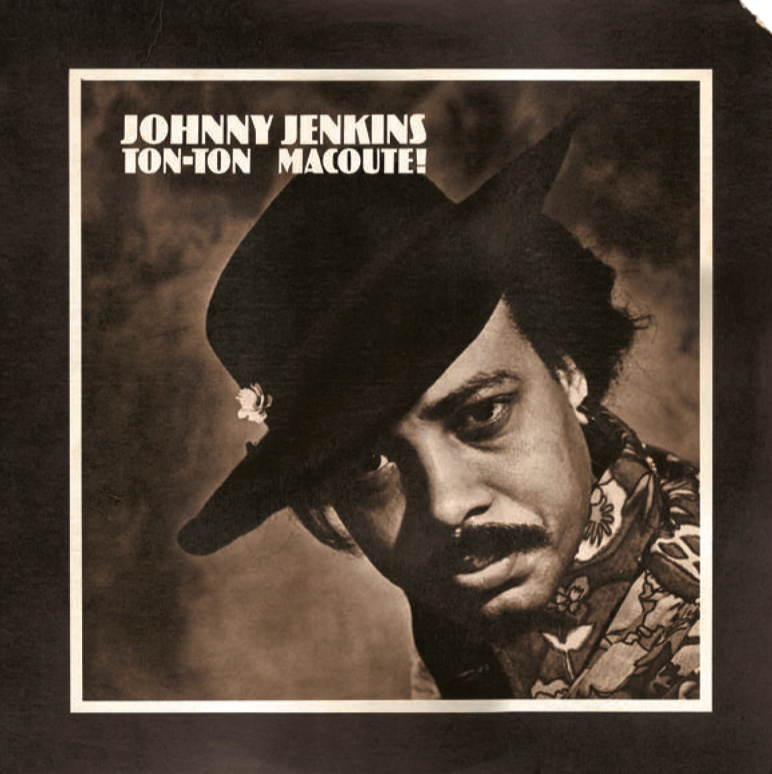
Johnny Jenkins was the first artist managed by Phil Walden, a fellow Macon, Georgia, native and cofounder of Capricorn Re- cords, the flagship Southern label the Allman Brothers called home. Naturally, the band is all over Ton-Ton Macoute! like stank on a June bug, accompanied by in-house Capricorn musicians, Muscle Shoals standout Eddie Hinton, and others. Originally slated as Duane Allman’s solo debut, none of the songs are original compositions, and, ironically, the most well-known selection, a rousing reading of the Dr. John voodoo paean, “I Walk on Guilded Splinters,” was ably covered by Cher on her 3614 Jackson Highway (Atco; 1969).
Like Ton-Ton Macoute!, 3614 Jackson Highway is also a collec- tion of covers, with its star surrounded by an accomplished cast of players in the Swampers rhythm section of Muscle Shoals. But while that album—essentially a Swampers effort featuring Cher— sought to reestablish its centerpiece in a more organic, marketable light, Jenkins’s solo debut is dripping with the Southern sentiment that he helped create.
By the time of the album’s release, the seasoned showman had already been instrumental in bringing Otis Redding from obscurity to stardom, and was also on the radar of fellow left-handed guitarist Jimi Hendrix as a model for onstage histrionics. Jenkins was a star in the making but, by most accounts, had no desire to be in the spotlight, preferring to remain a regional fixture and work the local circuit in lieu of chasing the international acclaim that many—Capricorn’s Walden, in particular—felt he was capable of achieving.
And having never reached stardom, there was no fall from grace for the influential Jenkins, who passed away in 2006 a legend in his Macon hometown. Ton-Ton Macoute! is the jewel of this legacy, signifying two sides of the career bluesman—the Jenkins family he chose, and the superstar lifestyle he left behind.
By Ronnie Reese



Volatile Combination - The Compounded Sound Of The Dirtbombs
Band In D.C. - Bad Brains Came With Extraordinary Positivity Out Of The Nations' Capital