

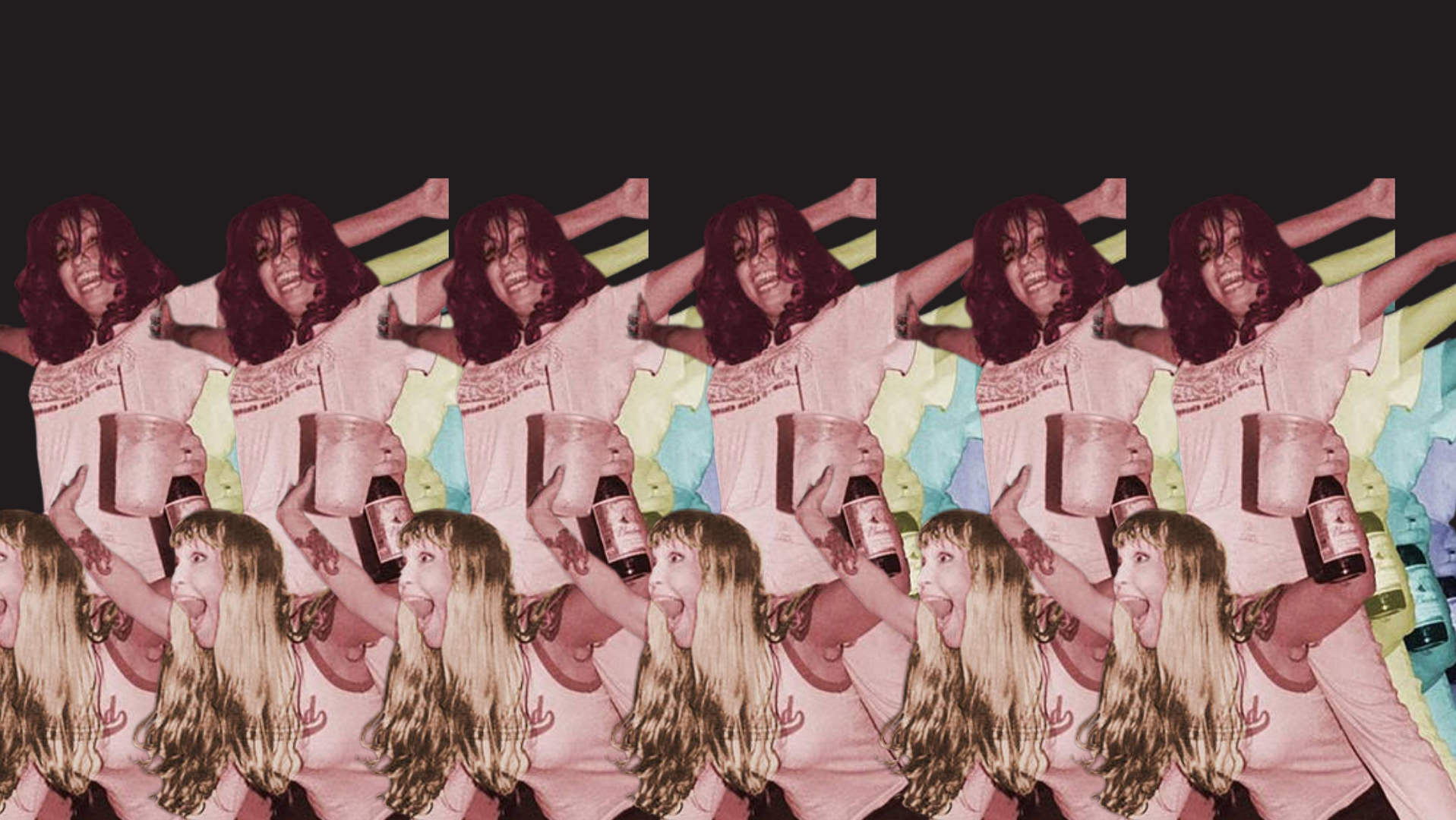
Few bands epitomize the Detroit garage-rock era as well as the Detroit Cobras. However, the dangerously infectious Cobras always took it a step further. While most bands took influence from sounds of the past, the Cobras’ repertoire consisted almost exclusively of cover songs given their gut-wrenching, sweat and soul-drenched treatment, directly paying respect to the previous generations of musicians that birthed the music scene they were part of. When musicians used the gritty background of the city to exaggerate their supposedly tough and humble beginnings, the Cobras’ founding members, guitarist Mary Cobra, as she is affectionately known by both friends and fans, and singer Rachel Nagy, actually lived lives that would have sent those so-called tough guys running back to their mamas. In the early 2000s, when the spotlight of the music world shone on Detroit, the Detroit Cobras were one of the bands who took center stage. With songs like “Cha Cha Twist” and “Shout Bamalama,” they moved their powerfully aggressive and sexy sound and stage show out of the smoky bars of the city into an international arena and developed a large and loyal following devoted to Nagy’s emotionally raw powerhouse vocals and Cobra’s driving and menacing guitar licks. While other bands from the same scene fizzled out, broke up, or moved on to other things, the Detroit Cobras continued going strong until 2022 brought the sudden tragic death of Nagy. Mary Cobra, who is offering an incredible Collection made up of pieces from her extensive assortment of musical relics, talked to Wax Poetics about growing up in the Detroit scene, being a student and steward of Detroit’s musical history, the ups and downs of being in a long term rock-and-roll band, what the future holds for the Cobras without her musical partner in crime, and how to successfully function in a dysfunctional city
 Mary Cobra performing in Barcelona
When did you first start playing music?
The kid across the street was cute and he wanted a guitar for Christmas. So then I wanted a guitar for Christmas. I didn't even know how to play, but I just took it and walked in front of his house, back and forth. Eventually, I go, “Oh, maybe I should try to play.” I knew so little about guitar playing that I didn't know it needed to be plugged into an amp. And then I ran away to Detroit. I was maybe thirteen, fourteen. There was a lady here who was like my stepdad's grandmother. So, I just went away with my guitar to Detroit. And I find that really interesting because that's not a very comfortable thing to carry when you're running away.
What happened when you arrived in Detroit?
I got a job. I was working at the [Detroit dime store] Kresge. This sounds like a ridiculous story but I dragged my guitar to play during lunch because then I didn't even know how to play. And then I heard a commercial saying, “Hey! Do you wanna play like this?” And I said, “Yes, I do.” It was a place where they were giving lessons. I would take the bus there. There was a girl there named Dana and she was trying to form a band. That's how we started the Vertical Pillows. Through the band, I met [Detroit Cobras’s founding member] Steve Shaw. And I ended up living with Steve. We met Rachel [Nagy, Detroit Cobra’s frontwoman]. And I just immediately just liked Rachel from the time I met her. We'd be at a bar, and Rachel, she'd be fighting, and then she goes, “I'm sorry. I didn't mean to hit you.” And she’d go back to fighting. I love someone like that. She said, “Well, I never sang for a band before. I said, “That's okay.” I remember I lent her a dress to strip in. So we became friends instantly. She was starting to sing, and she was a natural. That's just the bottom line. But, man, she was just a natural singer. She was my musical partner in crime.
 Rachel Nagy performing in Barcelona
How did the Detroit Cobras start?
Steve Shaw had a big record collection. Listen, the way most bands started in Detroit consisted of sitting around, drinking beer, and listening to records because there was nothing else to do. And that's basically what the Cobras did, no different than what Mitch Ryder and the Detroit Wheels did, what the Stones did, what the Beatles did. And then the Cobras started.
And then what happened?
We released three singles and then recorded our first album [Mink, Rabbit, or Rat on Sympathy For the Record Industry] and then broke up over money. The drummer called me and he called Rachel and said, “Let's get back together.” I got Eddie Harsch [of the Black Crowes], who was a closet bass player, put in [drummer] Kenny Tudrick, Dante [Aliano] left, Steve Nawara [of the Electric Six] came in. And I'm still changing people over.

And then success came?
I never thought of myself as a working musician. I never thought this was gonna last. Like, what happened? I didn't know how big we were until Rachel passed away. We went to Europe and we got commercials. I mean, we're on the last episode of Seinfeld, I think or was it Friends? I remember we walked into a bar while we were on the road and heard ourselves on the TV in one of those shows. It’s like, “Wow” and then you move on.
Why do you think Detroit had such a strong music scene?
Part of it was total freedom, total fucking freedom. I remember being at the bar and somebody needed a drummer and there were three drummers who could go on tour in a moment's notice. Because rent was a hundred bucks. You lived in a big house with three other people. The expenses were low.
You’re also close with musicians and members of the older generations of the Detroit scene. Can you talk about some of them?
Johnny “Bee” [Badanjek, drummer of Mitch Ryder and the Detroit Wheels], he told me he went to this club he heard about, the Village. At that point, Mitch Ryder's already there, he was singing with some band called the Peps. But anyway, [they formed a band] backing up different people from Motown, like the lesser-knowns of the scene. They were called Billy Lee and the Rivieras. And the only reason they became Mitch Ryder and the Detroit Wheels is because they were gonna record, and there was a band called the Rivieras that had a hit. And he said that Bob Crewe, who was the impressionario, opened up the phone book, went down and saw Mitch Ryder. He said, “You're Mitch Ryder and you guys are the Detroit Wheels.” They hated that shit. He said, “It took us years to realize what brilliance it was.”
And you have a connection with the MC5?
In the early ’80s, [MC5 frontman and his wife] Rob and Becky Tyner had this community church thing that had a concert series. I had run away to Detroit, and I was hanging out with some girl. I was always hungry when I was a kid. Like, always. Me and my friend were walking and I smelled food. It was a Unitarian church. I walked in there and I said, “Hey, how can I eat?” [Becky Tyner] picked up a tambourine and gave it to me, and she goes, “Shake it” and then she fixed me a plate. And she's been feeding me ever since.
The Grande Ballroom is where the MC5 started. The owner, Russ Gibb, wanted to emulate the Fillmore in San Francisco. Including the posters. He tried to do the same thing with music and lights. They had light shows. They had their own built-in house band. That was the MC5. A couple of people did the artwork. One of them was Gary Grimshaw, and he was a pinstriper. Everything in Detroit has gotta do something with cars. There's no way to get around it. This is where they recorded that record [Kick Out the Jams]. The MC5 were kind of a cult. You know what I mean? They lived together and it was about the revolution. Then, [poet, activist, and MC5 manager] John Sinclair was producing things for the revolution. They worked together as a unit. You know? There was a budget for rice. There was a budget for the equipment. There was a budget for weed.

John Sinclair lived with you for time. What was that like?
Whenever you walked around with John Sinclair, the weed would just appear. It was like smoking with the man, you know? He took me to a jazz club. I remember sitting there and people were just bringing him weed. Like, holy fuck, man. “Oh, here, try mine, John.”
Since Rachel’s passing, you have continued with the Detroit Cobras. Who is the singer now?
We got Masha Marjieh, she’s a fantastic singer that has performed with a lot of local bands. We were labelmates on Bloodshot Records when she was with the Deadstring Brothers. I look forward to collaborating with another great Detroit female singer.
What do you think makes Detroit Detroit?
Nobody cares what you're doing. I think there's something to that. This isn't for everyone. The landscape has a lot to do with who we are. What if we lived on an island? What if we had coconuts? Well, the music might sound a little different. I guess.
ENDS
DISCOVER THE MARY COBRA COLLECTION HERE

PLACES AND SPACES: Noches de Verano