


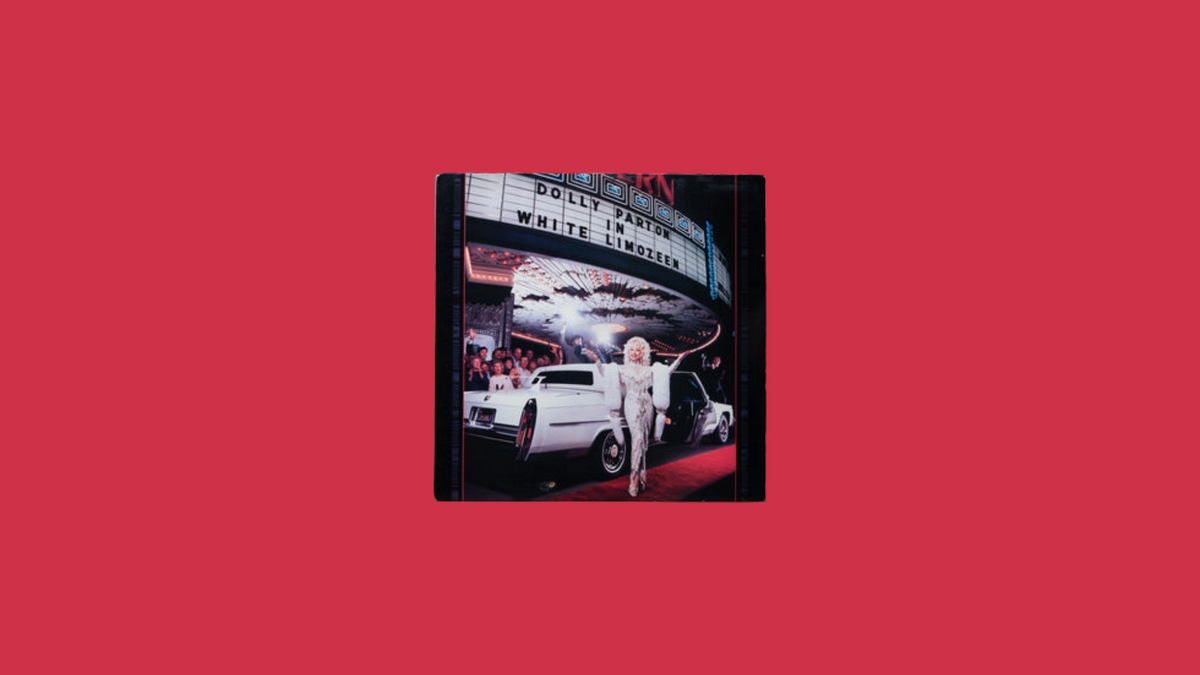
White Limozeen
Dolly Parton (1989)
The queen of country, the “dumb blonde”, the pop phenomenon, Dolly Parton was a tour-de-force who captivated the hearts of listeners. Dolly Parton’s legacy has been cemented in the Country Music Hall of Fame for her songwriting talent, her distinct voice, her maximalist approach to stardom, razor-sharp intelligence and abundant generosity. Never one to make herself palatable, Dolly embodied her flamboyant public image, famously saying, “It takes a lot of money to look this cheap.” She was involved in a self-aware mirror game between herself and a parody.
White Limozeen (1989) is an intimate snapshot of Dolly when she was navigating her musical identity and public persona at a crossroads. The same year that the album was released, Dollywood opened in Tennessee, and Dolly’s tenacious ambition was expanding into a growing enterprise. After spending much of the ’80s crossing over into pop music, this album heralds her return to her country roots. Produced by the country and bluegrass musician Ricky Skaggs, the album reconnects with country music from the twangy banjo riff that opens the first track. Dolly would ultimately be remembered for being genre-defying, and praised for taking country music into the mainstream.
Despite the album cover and title suggesting a world of Hollywood excess bedazzled in rhinestones, the spelling of the album alludes to her humble beginnings. On the bluesy title track, she tells the story of her journey to Hollywood: “she met the devil in the City of Angels but she never lost her soul.” Whilst she never lost her original flame, the refrain “dreaming of a white Limozeen” captures her beguiling ambition that has pushed her since her impoverished Appalachian upbringing. Similarly, “Take Me Back to the Country” rejects the rat race in favour of familiar territory.
Sensitively aware of how she was perceived, White Limozeen is a balancing act where Dolly grapples with the tension between herself and her public image. Here, she deconstructs the complex persona of Dolly Parton, taking listeners with her to Hollywood and back home, and staying true to herself along the way. The album comes back full circle with “He’s Alive,” a cover of Don Francisco’s Christian folk-gospel song.
---- ENDS ----


Chaos and Catharsis